He had visited before but since I had never been, he returned with me to explore the site. I will share some of the photos I took while we were there but know that they do not do the site justice by any means!
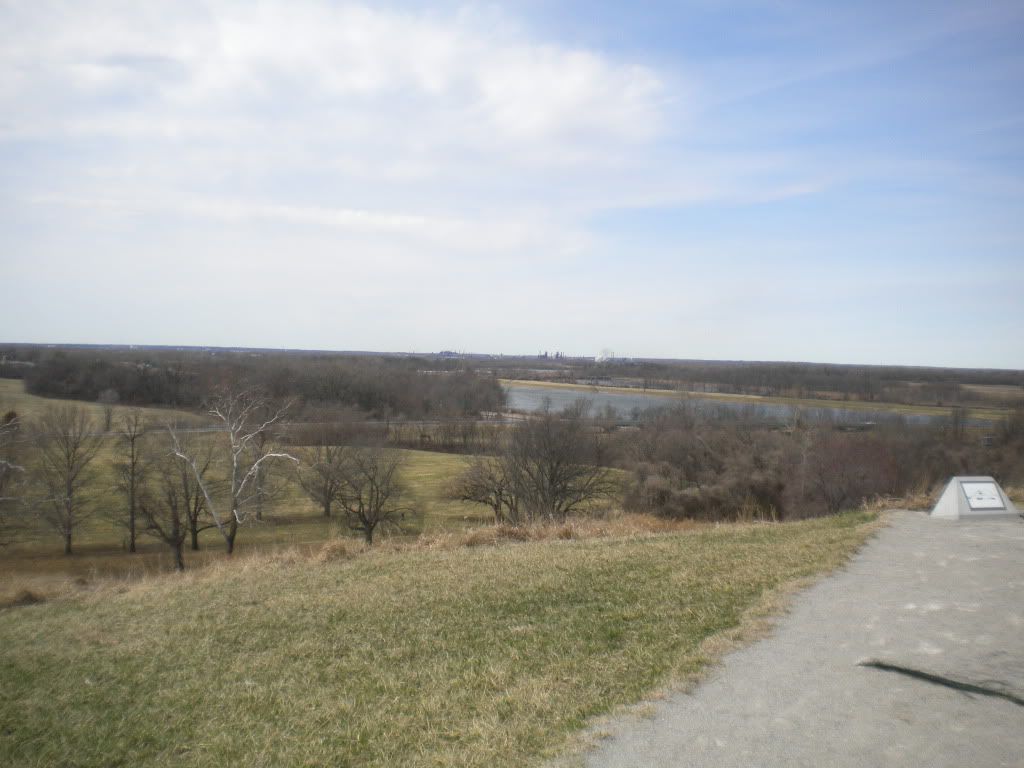 |
| A view of the Mississippi from the top of Monk's Mound |
Just as European cities at the time began to see the division of labor and professionalization of skills and trades, researchers have found evidence that a similar division of labor occurred in this settlement (think spear makers, potters, and other crafts people). Yet sometime around 1200, for reasons that are not entirely clear to researchers, the settlement fell into a decline and was completely abandoned by 1400 CE. Some likely causes for this decline include overcrowding, depletion of natural resources, war, disease, social and political unrest or more likely, a combination of these forces that brought about the end.
The word Cahokia is a bit of a misnomer because it refers to a group of native peoples who inhabited the area in the 17th century, long after the settlement had been abandoned. In the mid 18th century, local historians suggested it be called Cahokia Mounds to honor the 16th century natives.
J and I discussed this quite a bit as we were walking around and the popular perception of native peoples is that of nomadic, "uncivilized" people. Places like Cahokia Mounds demonstrate how far this popular opinion is from the truth.
The site itself consists of a museum, gift shop and the grounds themselves. While the natives built over 120 mounds, only one is fully accessible to visitors due to issues with erosion and so forth. As you look through these photos, keep in mind that each of these mounds were created by human hands and tools. Pretty amazing right?!
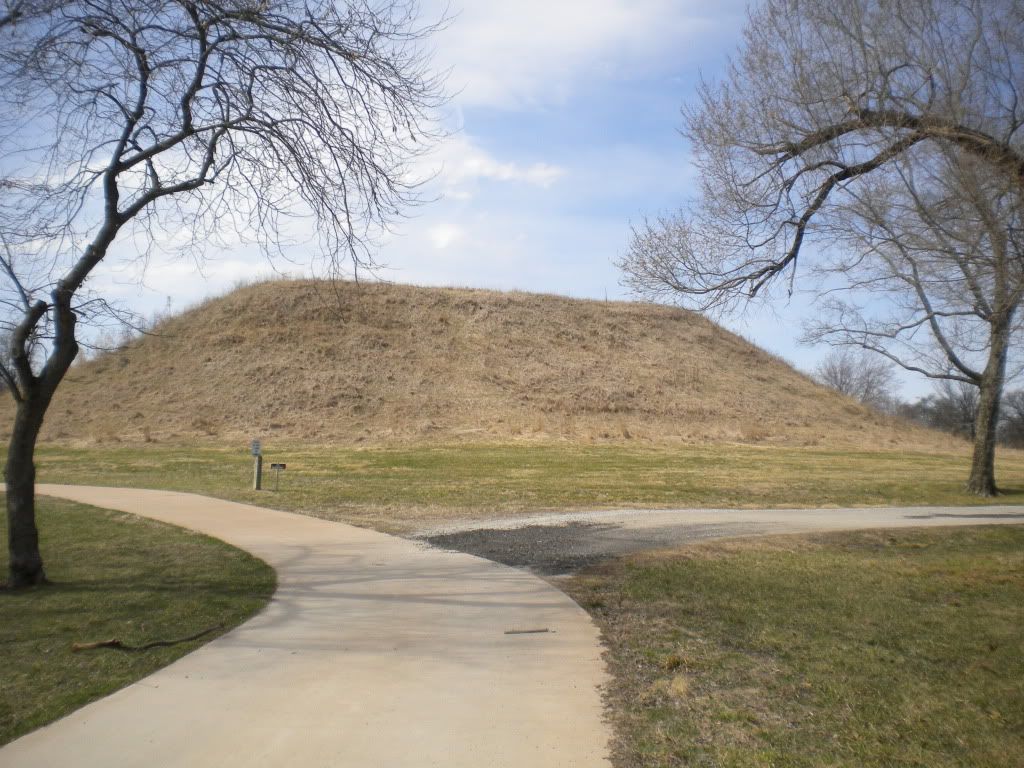 |
| One of the many mounds at the site (now a state park). You can see how erosion has taken its toll on these earthen mounds over the centuries. |
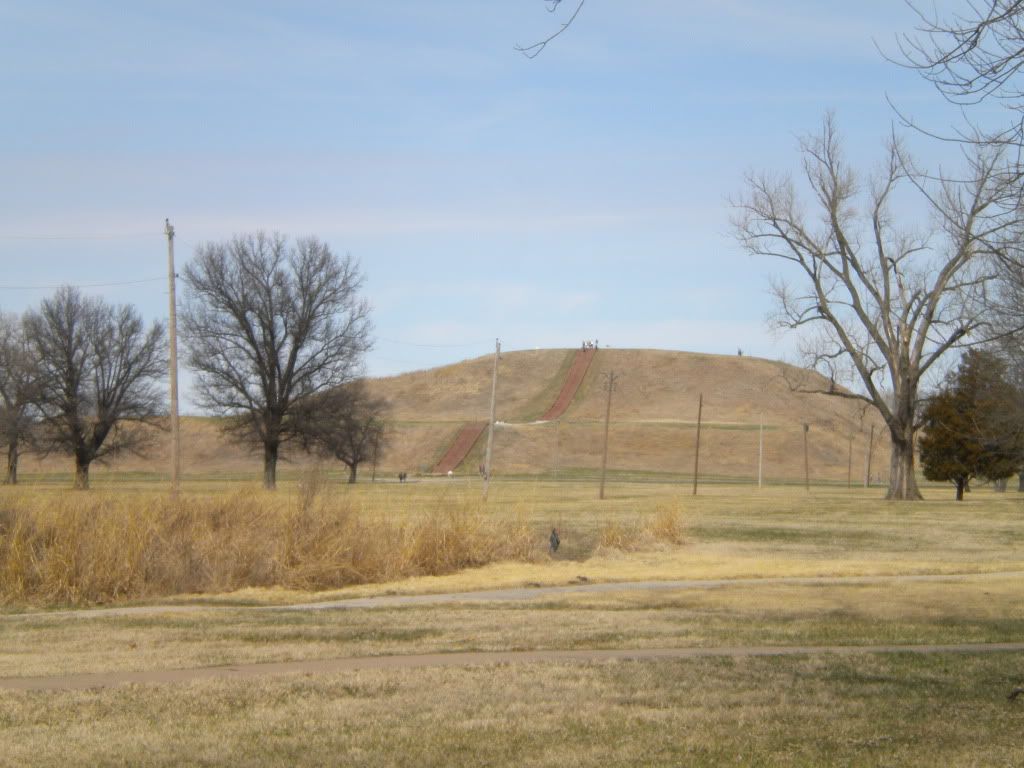 |
| A look as we approach the largest mound, Monk's Mound. The settlement's leader lived and ruled from a wooden structure that was built on the top of this mound. |
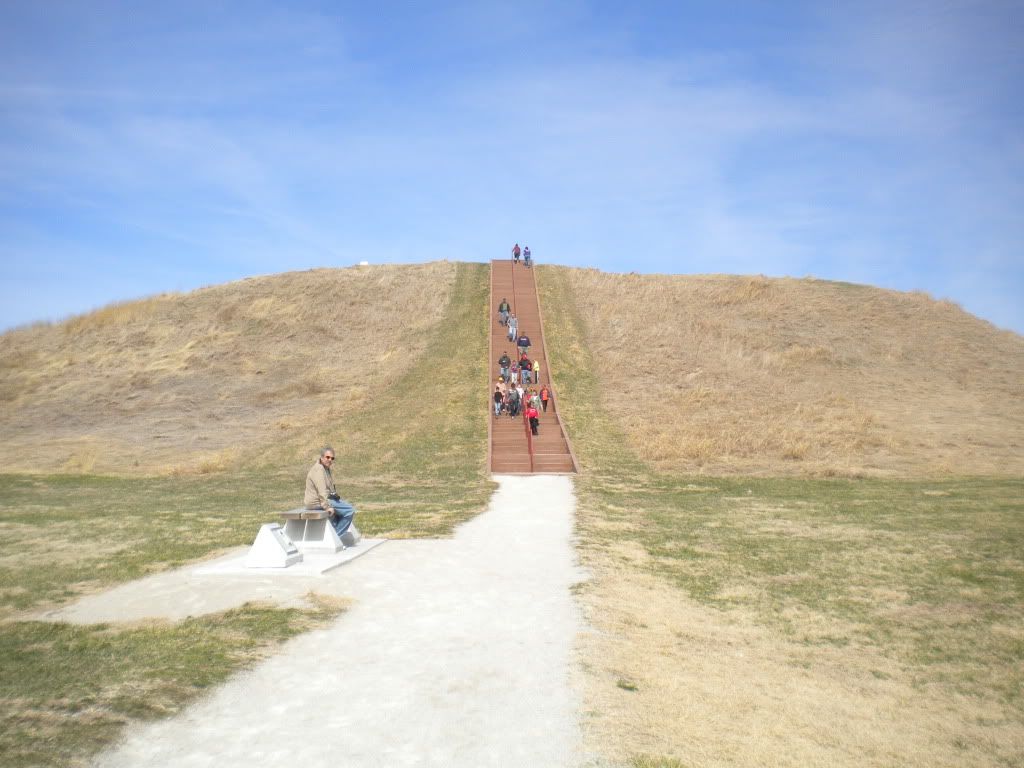 |
| Halfway up Monk's Mound. |
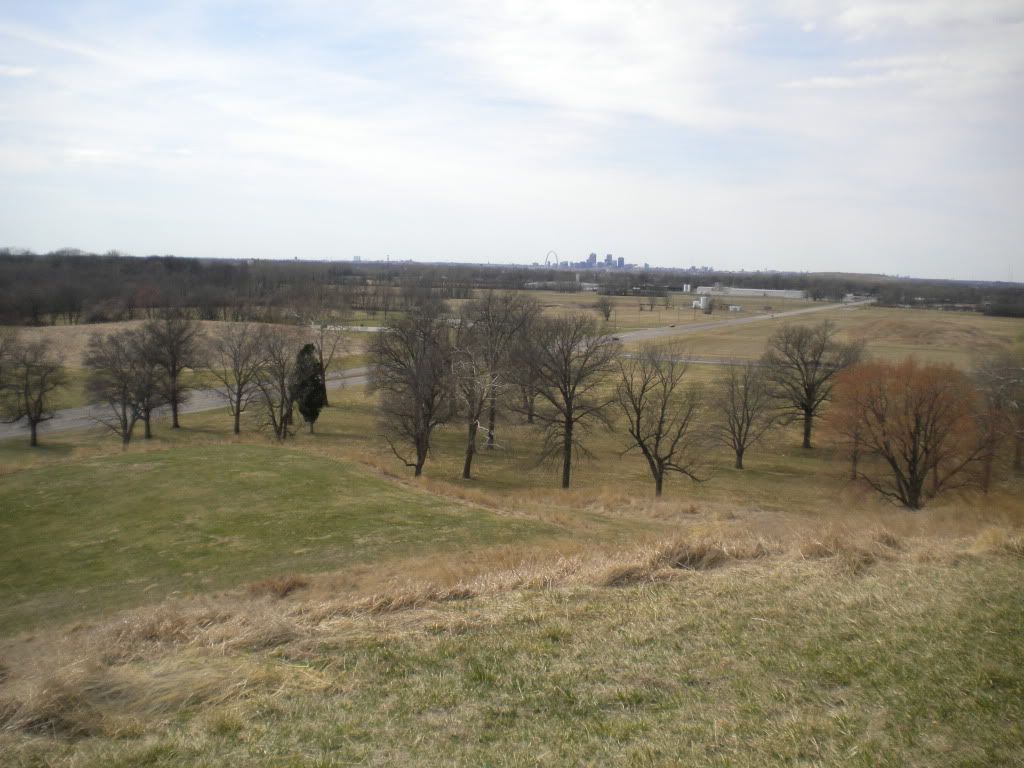 |
| A view from the top. This gives you a better idea of how big these mounds actually are since we are at least 12-13 miles away from downtown St. Louis. |
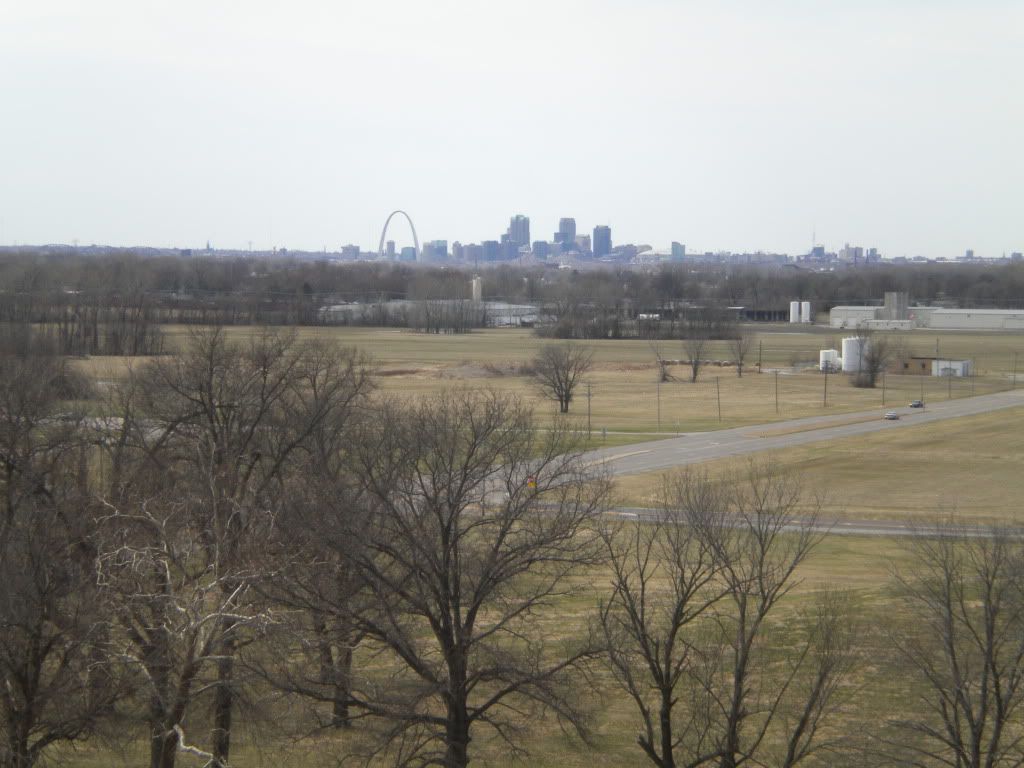 |
| Zoomed in view of Downtown St. Louis from the top of the mound |
This was a great place to visit and I would encourage everyone in the area to check it out, especially as the weather starts to get warmer (hopefully). Since I am not a native of Missouri, I really enjoyed learning more about its history!
Many have compared the settlement to Chichen Itza in Mexico. My question to you is: Have you ever been to Mexico and seen them in person? What about Cahokia Mounds or other local (St. Louis or not) treasures? I'd love to hear (and learn) all about them!